Safety shapes how people trust, use, and depend on battery banks—especially as storage systems grow larger and power more demanding devices. A battery bank is no longer a simple accessory; it often becomes a backup lifeline during outages, a work tool on the road, or a power source for RV life. Because of this, safety features must extend far beyond basic protections. They must ensure stable output, prevent thermal issues, avoid electrical faults, and maintain performance across years of heavy use. A system such as the Anker SOLIX F3000 paired with a 400W portable solar panel demonstrates how advanced engineering makes high-capacity backup not only powerful but reassuringly safe for homes and mobile living.
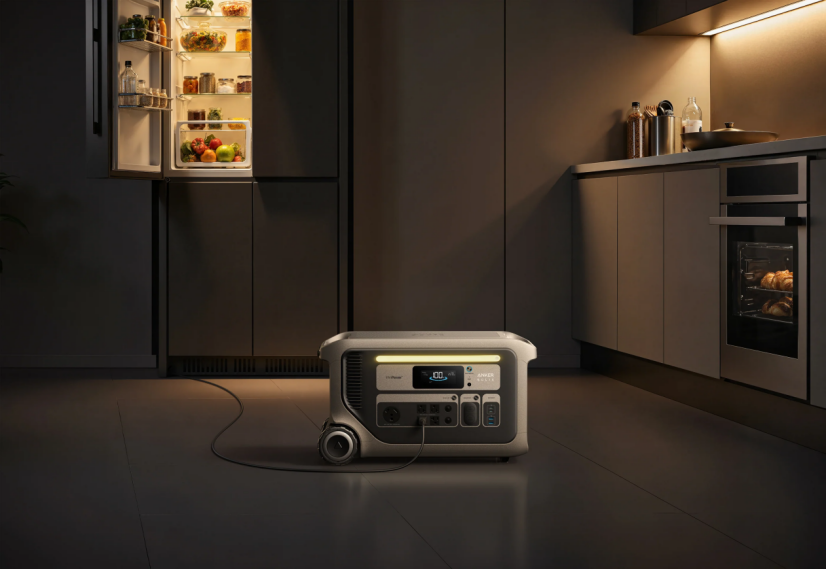
How Modern Battery Banks Protect Users Across Real-World Conditions
Thermal Management Prevents Overheating and Supports Long-Term Reliability
Effective thermal management is one of the most important safety requirements in any energy storage system. High-capacity battery banks generate heat during charging, discharging, and pass-through power. Without safeguards, heat buildup can shorten battery life or limit performance. Users rely on systems that monitor and regulate internal temperatures automatically. The F3000 performs consistently across a wide temperature range—from −4°F to 104°F during discharge—giving users safe, operation in winter storms, summer heat, and RV environments. Thermal stability also affects backup expectations. When users know their system stays cool under heavy loads such as refrigerators or power tools, they feel confident using battery storage for extended periods instead of rationing energy.
Electrical Protections Safeguard Devices and Prevent Fault Conditions
Every battery bank must manage risks such as short circuits, overvoltage, undervoltage, and current overload. These electrical protections ensure that devices connected to the unit remain safe even when power demands shift suddenly. For example, refrigerators, pumps, and compressors often have high startup surges that weaker systems struggle to handle. The F3000 protects itself and connected devices while maintaining stable 3,600W operation. This is especially important during emergencies, when users cannot afford electrical faults or shutdowns. Strong electrical protection allows households to use their backup energy freely and confidently, rather than worrying about damaging high-value appliances.
Structural and System Redundancies Create a Safer User Experience
High-capacity systems require engineering redundancies to remain safe under stress. These may include reinforced battery housings, stable connectors, fire-resistant materials, and multi-layer protective circuitry. Users often overlook structural safety, yet it determines how a battery bank performs during physical movement, vibration, or long-term storage. The F3000’s scalable design includes multiple layers of internal protection, enabling safe pairing with expansion batteries and supporting plug-and-play 240V setups without professional installation. Redundancy transforms safety from a reactive feature into a built-in system—allowing the unit to handle unexpected loads, fluctuating temperatures, or movement during RV travel.
Why Safety Features Influence Daily Use and Long-Term Backup Expectations
Safe Pass-Through Charging Enables Flexible All-Day Powering
Pass-through charging lets users power devices while simultaneously recharging the battery bank. This convenience is valuable but requires careful engineering to remain safe under high load. The F3000 delivers 3,600W full-speed pass-through performance without shutting down, enabling refrigerators, lights, tools, and electronics to run while the unit recharges from solar or fuel generator input. Pass-through safety ensures stable voltage and heat control even under continuous use. For families preparing for storms, RV travelers relying on steady AC power, or remote workers using multiple devices, this feature greatly shapes how they view safety and reliability in a solar power bank designed for home-scale backup.
Low Idle Consumption Reduces Heat and Extends Safe Backup Duration
Safety is not only about preventing catastrophic events—it also involves maintaining stable operation during long standby periods. Ultra-low idle consumption reduces heat generation, battery strain, and total wear. For example, the F3000 can remain on AC standby for up to five days or keep an 8 cu.ft refrigerator cool for roughly two days, thanks to its efficient power management. Low idle power ensures smoother performance during multi-day outages, where constant cycling could otherwise lead to overheating or premature shutdowns. Users interpret this efficiency as a form of safety: they trust the system to stay operational, predictable, and cool over extended periods.

Solar Charging Safety Ensures Stability During Weather Changes
Solar charging introduces unique safety considerations: fluctuating sunlight, voltage spikes, partial shading, and temperature swings. A battery bank must regulate solar input carefully, especially when supporting dual-voltage systems. The F3000 accepts up to 2,400W of solar, using 60V and 165V inputs that remain stable under variable outdoor conditions. Weatherproof 400W portable panels create additional safety by resisting water intrusion and environmental wear. When combined, the system offers safe renewable charging whether conditions are sunny, cloudy, windy, or unpredictable. Users gain confidence knowing their backup source remains safe even when the weather changes rapidly.
Conclusion
Safety defines how deeply users trust their battery bank—and how fully they rely on it during outages, travel, and daily energy use. Thermal protections prevent overheating and allow long-term operation under demanding conditions. Electrical safeguards protect devices and maintain stable performance during load fluctuations. Structural durability ensures safe operation even when the system is moved, scaled, or paired with additional power sources. The Anker SOLIX F3000 with its 400W portable solar panel integrates each of these principles, providing safe pass-through charging, low idle consumption, strong solar regulation, and dependable multi-day support. When safety features work together at this level, users no longer view their battery bank as a fragile backup—they treat it as a trusted, resilient energy partner built for long-term security.